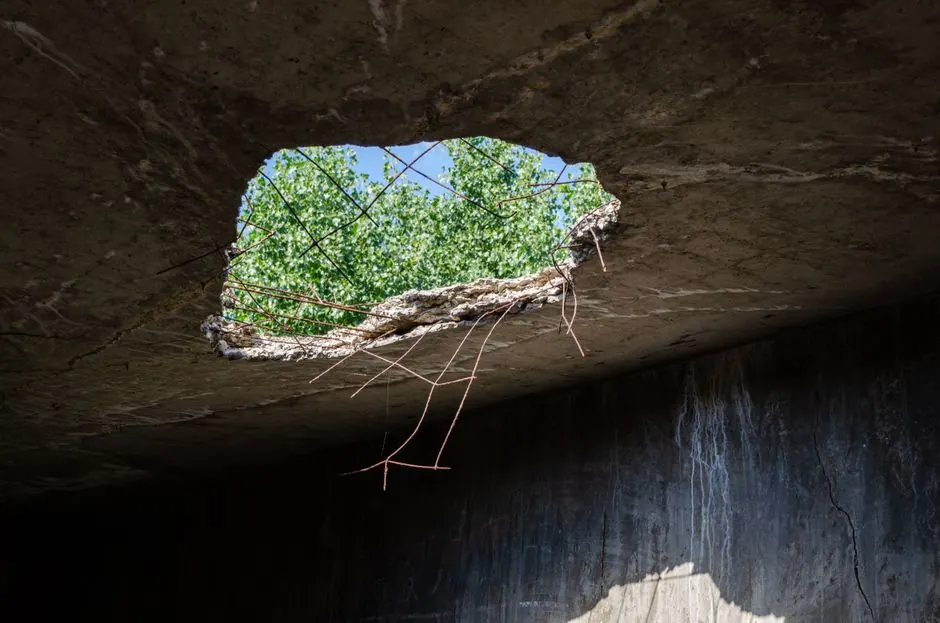
Your ceiling is leaking after water damage in Blanco Vista because water is still trapped above it - in the attic insulation, between the drywall layers, or inside the ceiling cavity itself - and gravity is finally pulling it through the paint or drywall seams. The leak did not start today. It started when the original water intrusion happened, and the ceiling is just the last surface to show it.
Below we walk through why this happens, the Blanco Vista-specific causes we see on almost every call, what ceiling water damage repair costs in San Marcos in 2026, and the mistakes that turn a small fix into a full ceiling replacement.
The short answer: your ceiling is still holding water
Ceiling leaking after water damage Blanco Vista is the visible end of a moisture problem that started somewhere above the ceiling plane. Drywall is a sponge. It will absorb water from a roof leak, a burst pipe, an overflowing tub, or a failed AC drain pan and hold it for days before a single drop reaches the surface.
Once the drywall paper and gypsum core hit roughly 15% moisture content, they start to sag, the paint separates, and water finds the seams between sheets. That is the brown ring or the drip you are seeing now.
The fix is never just painting over the stain. You have to find where the water is coming from, dry the cavity, and repair the drywall - in that order. Skipping the first two steps is how a $400 repair becomes a $4,000 one.
Why does a ceiling leak start days or weeks after the water damage?
A ceiling leak often shows up 3 to 14 days after the original water event because the water has to travel through the structure before it reaches a surface you can see. There are four reasons this delay happens.
- Insulation soaks first. Blown-in fiberglass and cellulose in a Blanco Vista attic can hold 10 to 20 times their weight in water before any of it reaches the drywall below.
- Drywall wicks slowly. Water moves through gypsum at roughly 1 inch per hour. A 5/8-inch ceiling panel can take most of a day to show a stain from a slow drip.
- Pinhole leaks hide. A cracked supply line or a slow roof flashing leak can drip for a week before the ceiling gives it away.
- Humidity loads the cavity. Central Texas humidity keeps the cavity wet longer, so the water keeps moving instead of drying out.
We see this pattern constantly in homes across water damage restoration in Blanco Vista, where the combination of fast-built subdivisions and clay-heavy soil means water finds the path of least resistance fast.
Blanco Vista-specific causes we see on almost every call
Blanco Vista sits on the northeast side of San Marcos, and the housing stock there creates a specific set of ceiling leak patterns. Here is what we actually find when we open up a ceiling in this neighborhood.
Roof and flashing failures
Most Blanco Vista roofs are architectural shingle, and most are now 12 to 18 years old. That is the window where pipe boots crack, valley flashing lifts, and ridge vents start letting water in during a hard north wind. A roof leak causing ceiling water damage in San Marcos TX almost always shows up first as a stain near a chimney, a vent pipe, or a valley - not in the middle of the ceiling.
If the roof is the source, we handle the roof leak water damage repair San Marcos TX side of it - tarping, drying the attic, replacing wet insulation - and coordinate with your roofer on the exterior repair.
HVAC condensate and drain pan overflows
In an attic-mounted air handler, a clogged condensate line backs up into the drain pan, the pan overflows, and water runs down the ceiling joists. This is the single most common cause of a ceiling leak in Blanco Vista that is not roof-related. It usually shows up in the same spot every summer.
Second-floor plumbing and tub overflows
A failed toilet supply line, a loose tub drain, or a kid who left the tub running will send water straight through the subfloor and into the ceiling below. The stain shows up directly under the fixture, and the drywall is usually wet across a 4-by-4-foot area by the time you notice it.
Storm-driven rain and wind
Central Texas spring and fall storms push rain sideways. Water gets behind siding, into window frames, and under shingles in ways a normal rain never does. After a big storm, we get a wave of calls about ceiling stains that appeared overnight.
When a storm is the cause, we start with storm damage restoration San Marcos TX to stabilize the structure, then move into drying and drywall repair.
How much does ceiling water damage repair cost in San Marcos TX?
Typical 2026 pricing for ceiling water damage repair in San Marcos TX runs $450 to $1,200 for a small stain and drywall patch, $1,200 to $3,500 for a larger section with insulation replacement, and $3,500 to $8,000 or more when the ceiling has to come down, the attic has to be dried, and mold remediation is involved.
Here is how the numbers break down in our area:
- Water damage assessment and moisture mapping: $150 to $350
- Structural drying (3 to 5 days, equipment included): $800 to $2,400
- Drywall cut-out and replacement (per 4x8 sheet area): $300 to $700
- Texture and paint match: $200 to $600
- Wet insulation removal and replacement: $400 to $1,500
- Mold remediation (if caught late): $1,500 to $6,000+
The single biggest cost driver is how fast you call. A ceiling leak caught in the first 48 hours is usually a drying job. A ceiling leak caught after two weeks is usually a demolition and mold job.
If you want a real number for your house, we start every job with a water damage assessment and inspection San Marcos TX using thermal imaging and pin meters so you know exactly what is wet before anyone cuts anything.
What to watch out for: mistakes that turn a $400 repair into a $4,000 one
The most expensive ceiling leak mistakes are the ones that look like common sense at the time. We see all of these every month in San Marcos.
- Painting over the stain. Kilz and stain-blocking primer hide the ring but trap the moisture. The drywall keeps sagging and the mold keeps growing behind the paint.
- Poking a hole to "let it drain" without drying the cavity. You relieve the pressure, but the attic insulation and joists stay wet.
- Running a box fan and calling it dried. A box fan moves air. It does not pull moisture out of a ceiling cavity. You need an LGR dehumidifier and directed airflow.
- Assuming the roof is the only culprit. Roughly half the ceiling leaks we open up in Blanco Vista turn out to be HVAC or plumbing, not roof.
- Waiting on the insurance adjuster before doing anything. You can and should start emergency drying immediately. Delaying 5 to 7 days for an adjuster is how mold gets a foothold.
- Ignoring the smell. A musty odor in the room above or below the stain means microbial growth has already started. That is a different, more expensive job.
One more thing: if the water came from a sewage backup or a toilet overflow with waste, it is Category 3 black water. That is not a drywall patch job - it needs sewage backup cleanup San Marcos TX with antimicrobial treatment before any rebuild.
When to call a professional
Call a professional the moment you see a ceiling stain larger than a dinner plate, a sagging ceiling, a bulge in the paint, or any musty smell in the room. Those four signs mean the cavity above is wet and the clock is running.
You should also call if the leak is anywhere near a light fixture, ceiling fan, or smoke detector. Water and live electrical are a combination you do not want to troubleshoot yourself.
At San Marcos Water Restoration Pros, we handle the whole chain: find the source, stop it, dry the cavity, remove and replace wet drywall and insulation, and match the texture and paint so you cannot tell we were there. We work directly with your insurance carrier and document everything with moisture readings and photos.
If you are not sure whether you have a real problem, we would rather come look than have you guess. A 30-minute inspection is a lot cheaper than a ceiling replacement.
Frequently Asked Questions
Why is my ceiling leaking after water damage?
Water is still trapped above the ceiling - in insulation, between drywall layers, or in the ceiling cavity - and gravity is pulling it through. Drywall absorbs water slowly, so the leak often appears 3 to 14 days after the original event.
Does ceiling water damage need immediate repair?
Yes. Mold can start growing on wet drywall within 24 to 48 hours, and a saturated ceiling panel can sag and collapse within 5 to 7 days. Emergency drying in the first 48 hours is the difference between a $500 repair and a $5,000 one.
Will insurance cover ceiling water damage in Blanco Vista?
Most Blanco Vista homeowners policies cover sudden and accidental ceiling water damage - burst pipes, appliance failures, storm-driven roof leaks. They typically do not cover long-term neglect or slow leaks you knew about. We document everything with moisture readings and photos to support your claim.
How much does ceiling water damage repair cost in San Marcos TX?
In 2026, expect $450 to $1,200 for a small stain and patch, $1,200 to $3,500 for a larger section with insulation, and $3,500 to $8,000+ if the ceiling comes down and mold remediation is needed. Speed of response is the biggest cost driver.
Can I just paint over a ceiling water stain?
No. Paint traps moisture and hides the problem while the drywall keeps deteriorating and mold grows behind it. The stain has to be dried, the source fixed, and the damaged drywall replaced before any primer or paint goes on.
Get help with water damage restoration in San Marcos
A leaking ceiling in Blanco Vista is a symptom, not the problem. We find the source, dry the cavity, and repair the ceiling so it does not come back.
Call San Marcos Water Restoration Pros at 512-325-0105 for same-day ceiling leak repair and a free moisture inspection.